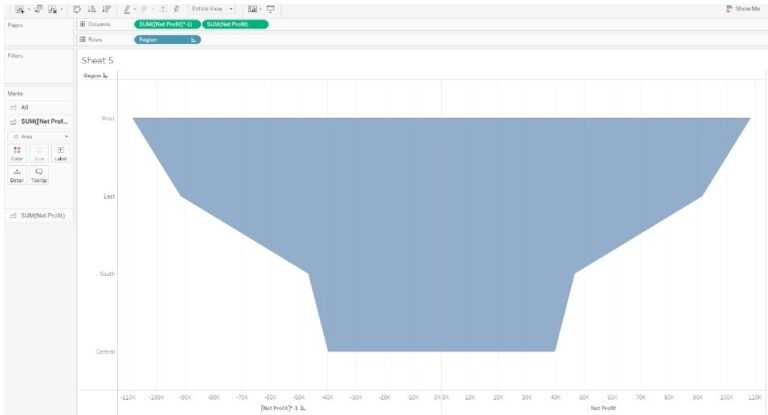
In the fast-paced world of digital business, understanding customer journeys and conversion paths is paramount. Yet, the traditional process of preparing data, identifying funnel stages, and building insightful visualizations often proves tedious, error-prone, and time-consuming. Imagine a world where complex data transformations and chart generation are handled with intelligent automation, freeing analysts to focus on what truly matters: deriving actionable insights. This is precisely the promise of an AI Funnel Chart Generator using Tableau and CSV documents.
At its core, this innovative approach transforms raw CSV data into dynamic, conversion-focused funnel visualizations within Tableau, dramatically streamlining your analysis workflow. It’s a powerful fusion of artificial intelligence and robust business intelligence, designed to cut through data complexity and deliver clarity. To truly grasp the paradigm shift this represents and unlock its full potential, we invite you to Learn about AI funnel charts and their profound value for modern analytics.
Unpacking the Power of AI-Driven Funnel Generation
An AI Funnel Chart Generator leverages sophisticated artificial intelligence techniques in conjunction with Tableau to automatically analyze your CSV data files. Its mission is clear: to identify funnel stages, detect drop-offs, highlight anomalies, and generate optimized funnel charts with minimal manual configuration. This isn't just about automation; it's about intelligent automation that learns from your data.
Key Components Fueling Intelligent Analysis
This powerful system relies on several foundational elements working in concert:
- CSV Document: Your primary data source. These structured text files contain tabular data that captures critical events, such as leads, website sessions, user actions, or transactional details.
- Tableau: The industry-leading business intelligence and data visualization platform. Tableau provides the canvas for rendering these sophisticated funnels, allowing for deep interactivity and exploration.
- AI Layer: This is the brain of the operation. Machine learning algorithms and rule-based logic dynamically detect funnel stages, calculate drop-off rates, identify data anomalies, and determine optimal data aggregations for accuracy.
- Funnel Chart: The end-goal visualization. It visually represents the progressive stages of a customer or user process, clearly illustrating volume decrease at each step and pinpointing where engagement might be faltering.
The AI-Driven Process: From Raw Data to Insightful Funnel
The magic truly happens as the AI navigates your data, transforming it from a raw CSV file into a compelling visual narrative within Tableau. It’s a multi-stage, intelligent process designed for precision and speed.
- CSV Data Ingestion: The journey begins when your AI platform or tool connects to or uploads your CSV files. AI routines immediately get to work, scanning for column types, null values, date-time patterns, and potential categorical sequences that could hint at funnel stages.
- AI-Based Data Profiling: Next, advanced AI models meticulously analyze the dataset. They work to understand which columns represent funnel steps, which metrics indicate volume or conversion, and the natural ordering of events that constitute a valid funnel flow.
- Funnel Stage Identification: This is where the AI truly shines. It identifies discrete funnel stages using sophisticated techniques like frequency analysis, sequential pattern mining, event timestamp ordering, and semantic analysis of column names (e.g., recognizing "Signed Up," "Trial Started," and "Purchased" as a logical sequence).
- Metric Aggregation and Validation: Accuracy is paramount. The AI intelligently determines the correct aggregation logic, whether it's
COUNTfor events orCOUNT DISTINCTfor unique users, ensuring it properly handles duplicates or missing rows to maintain data integrity. - Funnel Chart Generation in Tableau: Finally, Tableau renders the funnel. The AI often guides this process, recommending optimal calculated fields, custom funnel shapes, table calculations, and dynamic parameters for layout, color, and grouping. More advanced tools might even translate natural language requests—like "Show me the conversion funnel from lead to customer"—directly into data manipulations and Tableau commands, giving you unmatched agility.
Accelerating Insights and Empowering Decision-Making
The adoption of an AI Funnel Chart Generator offers a cascade of benefits, fundamentally changing how organizations approach conversion analysis. It's not just about making charts faster; it's about making better decisions quicker.
- Accuracy at Scale: This approach ensures consistent logic, correct aggregations, and reliable metrics across all your analyses, significantly minimizing human error and building trust in your data.
- Faster Time to Insight: What once took hours of manual data wrangling and chart creation can now be accomplished in minutes. This enables more iterative analysis, quicker reactions to market changes, and a more agile business strategy.
- Improved Decision-Making: By clearly identifying critical drop-off points, you can pinpoint areas for optimization in user journeys, allocate resources more effectively, and ultimately increase conversion rates.
- Developer/Analyst Productivity: Free your analytics team from the repetitive grind of data preparation. With AI handling the heavy lifting, analysts can dedicate their valuable time to interpreting results, exploring business questions, and driving strategic initiatives.
- Democratization of Data Visualization: Complex, insightful charts become accessible to a wider audience, including non-technical users, fostering a data-driven culture throughout your organization.
Crafting the Perfect Funnel: Data Prep, Design, and AI Validation
To fully harness the power of AI-driven funnel generation, careful consideration must be given to your data, the design of your funnel, and the intelligent validation of AI's suggestions. For a deeper dive into preparing your CSV documents for optimal analysis, Here are a few options for refining your approach.
Suitable CSV Data for AI Funnels
The AI thrives on well-structured, chronological event data. Ideal CSV files will typically include:
- A unique user or session ID to track individuals.
- A timestamp for each event, ensuring proper sequencing.
- A clear indicator of the event or stage (e.g., "Page View," "Add to Cart," "Purchase Complete").
Best Practices for Optimal Results
- Data Preparation: Ensure consistent naming conventions for funnel stages, remove any duplicate rows that could skew counts, normalize date/time formats, and strive for a clear 'one event per row' structure. This meticulous approach feeds the AI with cleaner data, leading to more accurate insights.
- Funnel Design: Aim for funnels with 5-8 stages to maintain clarity without overcomplicating the visualization. Always order stages logically and use
COUNT DISTINCTfor user-based funnels to avoid counting the same user multiple times. Label conversion rates clearly to highlight performance at each step. - AI Optimization: While the AI is powerful, manual validation of its detected stages and aggregation logic is crucial, especially in the initial setup. Monitor for outliers and anomalies the AI might flag, and be prepared to re-train the AI models if your underlying data schema experiences significant changes.
Avoiding Common Funnel Pitfalls
Be mindful of common mistakes: avoid treating funnels as simple bar charts, as they demand sequential logic. Always use correct aggregations, especially unique users for conversion rates. Prioritize addressing data quality issues before analysis, and never skip validating the AI's suggestions—it's an intelligent assistant, not a fully autonomous decision-maker.
Integrating AI with Tableau and Unlocking Broader Potential
While Tableau offers native AI features like Tableau AI and Einstein Copilot for general data analysis, a dedicated "AI Funnel Chart Generator" often manifests as a feature provided by third-party tools, custom extensions leveraging Tableau's API, or sophisticated scripts that preprocess data specifically for Tableau. The beauty here is that you, the user, retain full control for fine-tuning and customizing charts within Tableau, blending AI efficiency with human expertise. To truly Master AI funnel charts in Tableau, understanding this integration is key.
The underlying AI technology driving intelligent funnel generation is typically versatile enough to handle other complex visualizations too. Its core capability lies in intelligent data interpretation and transformation, making it adept at generating cohort analyses, Sankey diagrams, and various time-series charts from diverse datasets. For a deeper dive into the automated capabilities, you might want to Discover AI Funnel Chart Automation and its broader implications.
Real-World Applications and the Future Horizon
The impact of AI-driven funnel charts is evident across various industries and use cases:
- SaaS Conversion Analysis: Optimizing trial-to-paid subscriber funnels.
- E-commerce Checkout Optimization: Identifying friction points in the purchasing journey.
- Marketing Campaign Performance Tracking: Evaluating user progression from ad click to conversion.
- Product Onboarding Analytics: Improving user activation and retention through seamless first experiences.
Interpreting AI Funnel Charts for strategic decision-making can truly elevate your business. The future of this technology promises even greater sophistication, with likely developments including fully autonomous funnel discovery, real-time CSV streaming analysis for instantaneous insights, predictive funnel drop-off modeling, and even natural language interfaces for creating complex funnels with simple conversational requests. This ongoing evolution ensures that understanding your customer's journey will only become more intuitive and impactful, paving the way for unprecedented levels of business optimization.