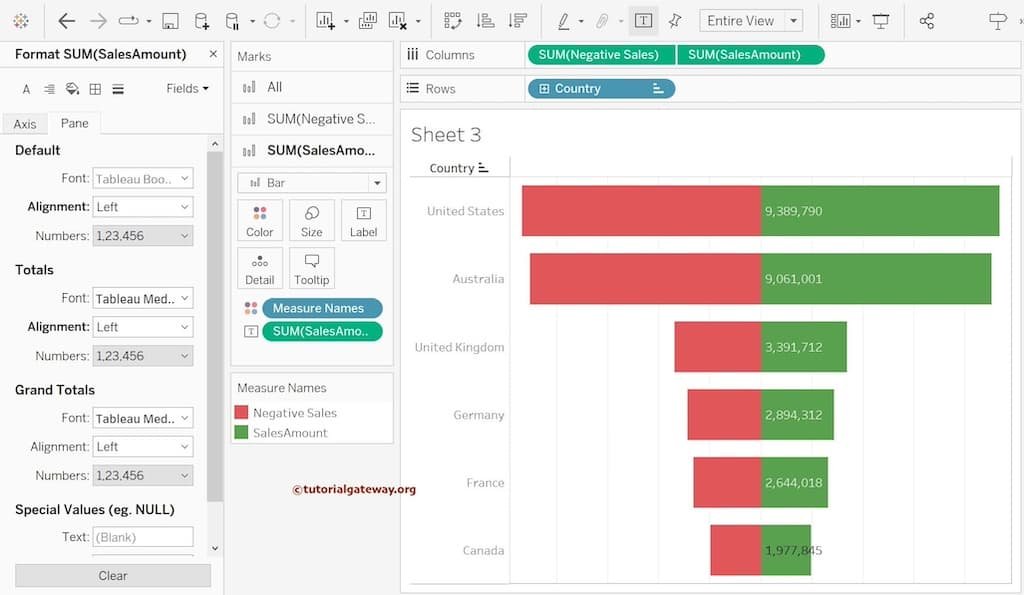
In today’s data-driven world, understanding customer journeys and conversion paths is paramount. Yet, manually constructing funnel charts in Tableau, especially from sprawling CSV files, can feel like an exercise in meticulous, time-consuming data wrangling. What if artificial intelligence could step in, automating the heavy lifting and surfacing insights you might otherwise miss? That’s precisely the power you unlock when embracing Building AI-Enhanced Funnel Charts in Tableau, transforming raw data into actionable intelligence with unprecedented speed and accuracy.
This isn't just about drawing pretty graphs; it's about fundamentally streamlining your analytics workflow, making complex data accessible and decision-making sharper. Imagine a system that not only visualizes your conversion steps but also intelligently detects stages, flags anomalies, and optimizes your view, all with minimal human intervention.
At a Glance: What You'll Discover
- Automated Insights: Learn how AI identifies funnel stages, optimal ordering, and bottlenecks directly from your CSV data.
- Faster Workflow: Cut down funnel creation time from hours to minutes, freeing up valuable analyst time.
- Enhanced Accuracy: Ensure consistent logic and correct aggregations, even across large, complex datasets.
- Deeper Understanding: Uncover hidden drop-off points and anomalies to fine-tune user journeys and marketing campaigns.
- Practical Steps: Get a clear roadmap for integrating AI principles with Tableau's robust visualization capabilities.
- Best Practices & Pitfalls: Navigate common challenges and adopt strategies for success in AI-driven funnel analysis.
The Bottleneck of Manual Funnels: Why AI is a Game-Changer
You know the drill: Export a CSV of user events, meticulously clean it, define each funnel stage, create calculated fields in Tableau, handle aggregations (is it COUNT or COUNT DISTINCT?), and then spend more time tweaking the visualization. It's precise work, often repetitive, and highly prone to human error, especially when dealing with dozens of stages, hundreds of thousands of rows, or evolving data schemas. This manual grind can delay insights, leading to missed opportunities and suboptimal decisions.
This is where the concept of an intelligent, AI-driven funnel chart generator comes into its own. Rather than replacing your analytical prowess, it augments it, acting as a smart co-pilot that handles the grunt work and highlights what truly matters.
Deconstructing the AI-Enhanced Funnel: Core Components
An AI-Enhanced Funnel Chart in Tableau isn't a single tool, but an integrated approach. It intelligently transforms raw CSV datasets into dynamic, conversion-focused funnel visualizations in Tableau, enriched with AI-driven insights. Think of it as a sophisticated pipeline with distinct, yet interconnected, elements:
- CSV Document: This is your raw material—a structured text file packed with tabular data. It might contain event logs, user sessions, e-commerce transactions, or lead activities, with each row often representing a specific event or stage.
- Tableau: Your visualization powerhouse. Tableau takes the processed data and renders the funnel chart, leveraging its capabilities for interactive dashboards, calculated fields, and diverse chart types.
- AI Layer: The brain of the operation. This layer, powered by machine learning algorithms or sophisticated rule-based logic, scans your data to automatically detect funnel stages, identify drop-offs, flag anomalies, and suggest optimal aggregations and chart designs.
- Funnel Chart: The final output. This visualization clearly represents the progressive stages of a process, making it easy to see volume decrease at each step and pinpoint where users abandon the journey.
What AI Brings to Your Funnel Game: Beyond Basic Visualization
While Tableau excels at visualization, the AI layer elevates funnel analysis from descriptive to prescriptive. Unlike manual funnel creation, AI-driven generation offers a suite of advanced capabilities:
- Automated Stage Detection: No more guessing which columns represent funnel steps. AI uses techniques like frequency analysis, sequential pattern mining, and even semantic analysis of column names (e.g., recognizing "Visited Page," "Added to Cart," "Completed Purchase") to automatically identify and order your stages.
- Optimized Stage Ordering: AI suggests the most logical and impactful sequence for your funnel stages, correcting common missteps that can skew your analysis.
- Bottleneck Identification: Beyond just showing drop-offs, AI can flag which specific stages are performing significantly below expected conversion rates, drawing your attention to critical areas for improvement.
- Anomaly and Inconsistency Flagging: The AI layer acts as a data quality guardian, detecting unusual spikes or drops, data inconsistencies, or even potential data entry errors in your CSV, ensuring your insights are built on a solid foundation.
- Intelligent Aggregation Logic: One of the trickiest parts of funnel building is choosing the right aggregation (e.g.,
COUNTof events vs.COUNT DISTINCTof unique users). AI helps determine the correct logic, handling duplicates and missing values to ensure accurate, reliable conversion metrics. - Visualization Optimization: AI can even recommend layout adjustments, color encoding, or stage groupings within Tableau to make your funnel chart more intuitive and impactful.
The Journey of Data: AI-Enhanced Funnel Workflow Explained
Building an AI-enhanced funnel chart in Tableau follows a robust, often automatable, pipeline designed for efficiency and accuracy:
- CSV Data Ingestion: Your journey begins when CSV files—containing event or transactional data—are uploaded or accessed. Tableau initiates data reading, using its schema inference capabilities to understand the data structure. Simultaneously, AI routines scan the data for column types, null values, date-time patterns, and categorical sequences, forming an initial profile.
- AI-Based Data Profiling: With the data ingested, AI models dive deeper. They analyze the dataset to grasp which columns genuinely represent funnel steps, which metrics indicate volume or conversion, and the natural ordering of events. This profiling is crucial for the subsequent stage identification.
- Funnel Stage Identification: This is where the AI truly shines. Employing sophisticated techniques, the AI identifies the distinct stages of your funnel. It uses sequential pattern mining to understand event flow, frequency analysis to spot common milestones, and semantic analysis on column names to interpret their meaning as stages. For instance, it can infer a "Visitor" stage from website traffic data, "Prospect" from sign-ups, and "Customer" from purchases.
- Metric Aggregation and Validation: The AI then determines the correct aggregation logic. It discerns whether you need a simple
COUNTof events, aCOUNT DISTINCTof unique users, or aSUMof specific values. It also proactively handles potential data pitfalls like duplicate rows or missing entries, ensuring the metrics you see are truly accurate reflections of your conversion process. - Funnel Chart Generation in Tableau: Finally, with stages identified and metrics validated, Tableau takes over. It renders the funnel visualization using calculated fields, custom shapes, table calculations, and dynamic parameters. The AI may even provide recommendations for layout, color encoding, or stage grouping, guiding Tableau to create a clear, compelling, and insightful chart. This entire process is significantly accelerated compared to manual methods, as detailed in how a Tableau AI funnel chart generator can automate most of these steps.
The Untapped Potential: Why AI-Enhanced Funnels Matter
The shift from manual to AI-enhanced funnel creation isn't just an incremental improvement; it's a transformative leap in how you approach conversion analytics.
- Accuracy at Scale: For large and complex datasets, manual funnel building is highly susceptible to errors. AI ensures consistent logic, correct aggregations, and reliable conversion metrics across all your funnels, drastically reducing human error.
- Faster Time to Insight: Imagine reducing the time it takes to build a robust, insightful funnel chart from hours or even days to mere minutes. This speed allows teams to react faster to market changes, identify emerging trends, and test hypotheses more rapidly.
- Improved Decision-Making: By pinpointing exact drop-off points and highlighting anomalies, AI-enhanced funnels provide clearer, more actionable insights. This empowers teams to optimize user journeys, improve marketing ROI, and significantly increase product conversions.
- Developer Productivity: Developers and data engineers can shift their focus from repetitive chart configuration to more strategic tasks like data modeling, pipeline optimization, and developing advanced analytical capabilities. The AI handles the routine, allowing humans to tackle the complex.
Tools & Techniques: Your AI Funnel Toolkit
Implementing AI-enhanced funnels requires a blend of standard BI tools and specialized AI techniques.
Core Tools You'll Need
- Tableau Desktop or Tableau Cloud: The primary platform for visualization and interactive dashboard creation.
- CSV Data Sources: Your raw data, structured for analysis.
- Python or R (Optional): These programming languages are often used for advanced AI preprocessing, custom machine learning model development, or complex data transformations before data enters Tableau. Libraries like Pandas (Python) are invaluable here.
- SQL (for Data Normalization): If your data resides in a database or requires significant restructuring before CSV export, SQL is essential for cleaning, normalizing, and preparing it for AI analysis.
AI Techniques at Play
The "AI Layer" isn't magic; it's built on established computer science principles:
- Pattern Recognition: Algorithms detect recurring sequences or structures within your data that indicate a funnel stage.
- Clustering: Grouping similar events or user behaviors together to infer logical steps.
- Natural Language Processing (NLP) on Column Names: Analyzing the text in your CSV headers to understand their semantic meaning and identify potential funnel stages (e.g., "signup_date," "purchase_complete_timestamp").
- Anomaly Detection: Identifying data points that deviate significantly from the norm, indicating unusual drop-offs, unexpected surges, or data quality issues.
- Tableau Features as AI-lite: Don't forget Tableau's built-in smart features like Data Interpreter (to clean and prepare messy data) and Explain Data (an AI-powered feature that helps uncover the "why" behind data points), which can complement your external AI efforts. Leveraging these features alongside a Tableau AI funnel chart generator significantly enhances your analytical depth.
Building Smarter Funnels: Best Practices
To get the most out of your AI-enhanced funnel charts, follow these crucial best practices:
Data Preparation is Paramount
Garbage in, garbage out applies double here.
- Consistent Naming: Use clear, consistent naming conventions for your funnel stages in the raw data. This helps the AI (and humans) understand the progression.
- Remove Duplicate Rows: Ensure each unique event or user interaction is represented only once per relevant stage to avoid inflated numbers.
- Normalize Date and Time Formats: Consistent date/time stamps are critical for accurate sequential analysis.
- One Event Per Row (Ideally): For optimal AI analysis, structure your CSV so that each row typically represents a single event or a distinct stage transition for a unique identifier (like a user ID).
Smart Funnel Design Principles
Even with AI doing the heavy lifting, good design principles ensure clarity.
- Limit Funnels to 5–8 Stages: While AI can detect many, too many stages can make a funnel difficult to interpret. Focus on the most critical milestones.
- Order Stages Logically: The AI will suggest this, but always double-check. Ensure the progression makes intuitive sense for your business process.
- Use
COUNT DISTINCTfor User-Based Funnels: When tracking unique users through a journey,COUNT DISTINCTis usually the correct aggregation, ensuring you don't count a user multiple times for the same stage. AI helps validate this. - Label Conversion Rates Clearly: Make sure the conversion rate between each step, and the overall conversion, is prominently displayed and easy to understand.
AI Optimization & Validation
AI is powerful, but it's a tool, not a replacement for human intelligence.
- Validate AI-Detected Stages Manually: Always review the stages and their ordering suggested by the AI. Does it align with your business understanding?
- Audit Aggregation Logic: Confirm the AI has chosen the correct aggregation (e.g.,
COUNT DISTINCTfor users,SUMfor revenue). - Monitor Outliers and Anomalies: Use the AI's anomaly flagging to investigate unusual drops or spikes. These are often where the most valuable insights lie.
- Re-train AI Logic When Data Schema Changes: If your CSV's structure or naming conventions evolve, ensure your AI layer is updated or retrained to maintain accuracy.
Navigating the Pitfalls: Common Mistakes to Avoid
Even with advanced AI assisting you, certain missteps can derail your funnel analysis:
- Treating Funnels as Simple Bar Charts: A funnel chart is inherently sequential. Ignoring this sequential logic by just counting events without understanding their order will lead to meaningless data.
- Using Incorrect Aggregations: This is perhaps the most common mistake. Counting every "page view" instead of every "unique user" who viewed a page can drastically overstate your funnel's top-of-funnel numbers and distort conversion rates. The AI's role in validating aggregation logic is critical here.
- Ignoring Data Quality Issues: Missing values, duplicate rows, inconsistent timestamps, or mixed data types in your CSV will break any funnel, AI-enhanced or manual. Data cleaning is non-negotiable.
- Over-Automating Without Validation: While AI streamlines the process, blindly accepting all AI suggestions without human review can lead to misinterpretations, especially if the AI model isn't perfectly tuned to your specific business context.
- Neglecting Context: A funnel tells you where drop-offs occur, but not why. Failing to apply business context and qualitative analysis to the AI's findings is like having a map but no compass.
For the Developers: Your Checklist for Success
If you're on the technical side, setting up the AI-enhanced funnel pipeline requires a structured approach. A robust Tableau AI funnel chart generator pipeline often involves these steps:
- Confirm CSV Schema Consistency: Verify that incoming CSV files adhere to a consistent structure (column names, data types). Automate schema validation if possible.
- Identify Candidate Funnel Columns: Programmatically identify columns that are likely candidates for funnel stages (e.g., event names, timestamp columns, status updates).
- Clean and Normalize Data: Develop scripts to handle missing values, standardize date/time formats, remove duplicates, and ensure data integrity.
- Apply AI-Assisted Profiling: Integrate AI routines (Python/R scripts or cloud AI services) to analyze the cleaned data for stage detection, ordering, and aggregation logic suggestions.
- Validate Funnel Stage Order: Implement a mechanism to allow human review and override of AI-detected stage order, ensuring business logic alignment.
- Choose Correct Aggregation Metrics: Automatically or semi-automatically determine whether
COUNTorCOUNT DISTINCT(or other aggregations) is appropriate for each stage based on identified metrics. - Generate Tableau-Friendly Output: Format the processed data and calculated fields into a structure Tableau can easily consume for visualization.
- Test Funnel Output Against Raw Data: Rigorously test the generated funnel chart against a subset of raw data to ensure accuracy and catch discrepancies.
- Document Assumptions: Clearly document the AI models used, their training data, and any assumptions made during automated stage detection and aggregation.
Manual vs. AI-Driven Funnels: A Clear Contrast
The difference between manually crafting funnels and letting AI take the lead is stark:
| Feature | Manual Funnel Creation | AI-Driven Funnel Generation |
|---|---|---|
| Time Investment | Hours to days, highly dependent on data complexity. | Minutes to an hour, significantly automated. |
| Accuracy & Consistency | Prone to human error, inconsistencies across reports. | Highly accurate, consistent logic and aggregations. |
| Scalability | Poor, struggles with large datasets or many funnels. | Excellent, handles large datasets and multiple funnels easily. |
| Insight Depth | Relies on analyst's intuition to spot issues. | Proactive anomaly detection, bottleneck identification. |
| Setup Complexity | Requires deep Tableau and data manipulation skills. | Minimal configuration, AI handles complex logic. |
| Adaptability | Slow to adapt to schema changes. | Can be retrained or configured to adapt quickly. |
| For organizations dealing with large, complex datasets, multi-stage user journeys, and rapidly changing schemas, the benefits of AI-driven generation are simply undeniable. |
Real-World Impact: Key Use Cases
AI-enhanced funnel charts are proving invaluable across various industries and business functions:
- SaaS Conversion Analysis: Understanding the journey from free trial signup to paid subscription, identifying where users churn out.
- E-commerce Checkout Optimization: Analyzing the path from product view to final purchase, pinpointing stages where customers abandon their carts.
- Marketing Campaign Performance Tracking: Evaluating the effectiveness of different campaigns in converting leads into qualified prospects and customers.
- Product Onboarding Analytics: Visualizing how new users navigate an application's initial setup, flagging areas of friction.
- Customer Support Resolution: Mapping the stages of a support ticket, from submission to resolution, to improve efficiency.
In each scenario, the ability to quickly and accurately visualize these critical paths empowers teams to make data-backed decisions that drive growth.
The Horizon: Future Developments in AI Funnel Charts
The evolution of AI-enhanced funnel charts is just beginning. Expect to see exciting advancements in the near future:
- Fully Autonomous Funnel Discovery: AI models will become even more sophisticated, capable of discovering entirely new, hidden funnel paths within unstructured event data without any pre-definition.
- Real-Time CSV Streaming Analysis: Imagine funnels updating in real-time as data streams in, allowing for immediate insights and responsive interventions.
- Predictive Funnel Drop-off Modeling: AI won't just tell you where drop-offs occur, but will predict who is likely to drop off at certain stages and why, enabling proactive engagement.
- Natural Language Funnel Creation: Users could simply describe the funnel they want ("Show me the journey from website visit to purchase for new users in California"), and the AI would generate the chart automatically. This would truly make analytics accessible to everyone.
Your Questions, Answered: FAQs About AI-Enhanced Funnel Charts
You've got questions, and we've got crisp answers.
Is AI required for funnel charts in Tableau?
No, you can absolutely build funnels manually in Tableau. However, AI significantly improves the speed, accuracy, and scalability of funnel creation, especially with large or complex datasets, offering deeper, more automated insights.
What type of CSV data works best for AI-enhanced funnels?
Event-based or stage-based CSV data with consistent naming conventions and clear timestamps produces the best results. Each row should ideally represent a distinct event or transition for a unique user or identifier.
Do developers need machine learning expertise to implement this?
Often, no. While the underlying AI models leverage machine learning, many AI capabilities are embedded within existing tools or workflows, requiring configuration and integration rather than deep model building or training expertise. Data cleaning and scripting knowledge are usually more critical.
Can AI detect funnel drop-off reasons automatically?
AI excels at identifying where drop-offs occur and flagging anomalies. While it can suggest correlations, determining the precise root causes of drop-offs still largely requires human analysis, business context, and qualitative research.
Is this approach suitable for very large datasets?
Absolutely, it is especially effective for large, complex datasets where manual funnel creation becomes impractical, time-consuming, and prone to error. AI's ability to process and analyze data at scale is one of its core strengths here. Using a Tableau AI funnel chart generator is particularly beneficial for these scenarios.
Mastering Your Conversion Paths
Embracing AI-enhanced funnel charts in Tableau isn't just about adopting a new technology; it's about fundamentally rethinking how you approach conversion analytics. You're moving beyond simple visualization to a system that intelligently understands your data, proactively identifies critical insights, and empowers faster, more accurate decision-making.
By focusing on clean data, understanding the AI's capabilities, and maintaining a human-in-the-loop validation process, you can transform your raw CSV data into a powerful, actionable narrative of your user journeys. Start by auditing your existing data, experimenting with AI-driven profiling tools, and taking the first step towards a smarter, more efficient analytics workflow. The journey to optimized conversion begins here.